

Charleston, South Carolina Coastal Vehicle Care: Protecting Your Car From Heat, Humidity, Sand, and Salt
Contents
Table Of Contents
- Why Charleston Coastal Roads Are Hard on Vehicles
- Manage Heat and Glare
- Choose Window Film Carefully
- Protect Paint From Sun, Sand, and Debris
- Create a Realistic Cleaning Routine
- Check Tires for Hot-Weather Driving
- Care for the Interior
- Review Tint Rules and Safety
- Use a Seasonal Checklist
- Common Questions
Charleston, South Carolina, drivers deal with more than ordinary road dust. Strong Lowcountry sun, humid afternoons, sudden rain, sandy shoes after a beach day, and salty coastal air can all affect a vehicle’s finish, glass, tires, and cabin. Building a practical care routine, including considering ceramic coating for cars in Charleston, SC, can help your vehicle stay more comfortable and easier to maintain through every season.
The goal is not to make a car invulnerable. It is to remove damaging residue promptly, reduce unnecessary exposure, and catch small maintenance problems before a commute over the Ravenel Bridge or a weekend drive to Folly Beach turns into an inconvenient repair.
Why Charleston Coastal Roads Are Hard on Vehicles
Salt mist and moisture can settle on exterior surfaces, while sand and fine grit can scratch paint if rubbed across it dry. Intense sunlight can also heat cabins, fade trim, and leave steering wheels and seats uncomfortable. Summer storms add another concern, because worn wipers, cloudy headlights, and weak tires become more noticeable when visibility drops quickly.
For drivers searching for automotive ceramic coating near me, it helps to remember that surface protection works best alongside regular washing and inspections. A coating, film, or sealant can support maintenance, but none replaces rinsing salt away, checking tire condition, or promptly addressing paint chips.
Manage Heat and Glare Before They Wear You Down
Heat control and glare reduction can make daily driving in Charleston more pleasant, especially for vehicles parked outdoors at work, school, or home. Visible light transmission indicates how much light passes through glass, while solar heat rejection and ultraviolet protection refer to distinct benefits. A darker appearance alone does not guarantee the strongest heat performance.
Quality window film can reduce glare and support cabin comfort without making safe visibility an afterthought. It may also add UV protection. The UVA rays that can pass through some vehicle windows are one reason to look beyond shade alone when comparing film options.
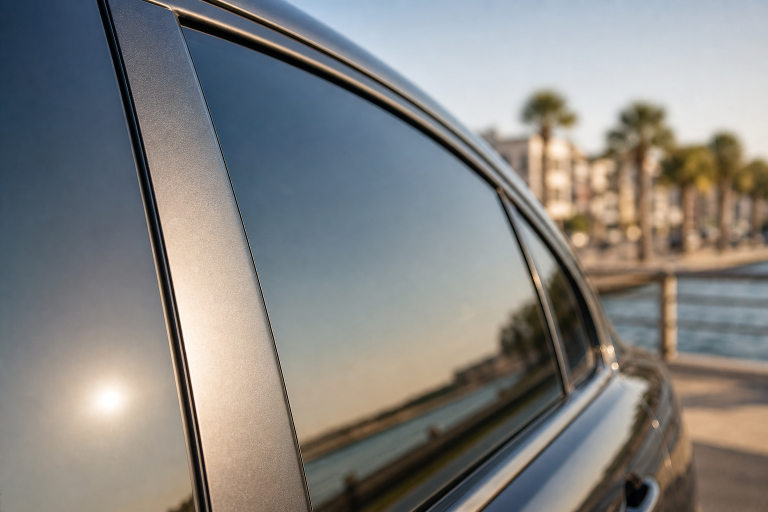
Choose Window Film With Daily Driving in Mind
Before installation, decide what matters most: glare control, heat reduction, privacy, UV blocking, or a balanced combination. Then compare film specifications rather than choosing solely by how dark a sample looks.
- Review visible light transmission: Make sure the selected shade provides clear visibility for daytime and nighttime driving.
- Ask about optical clarity: Clear views are especially valuable during heavy rain and on poorly lit roads.
- Confirm electronics compatibility: Ask whether the film could affect antennas, sensors, or other vehicle features.
- Read the warranty: Look for coverage related to peeling, bubbling, fading, or discoloration.
- Follow aftercare instructions: Freshly installed film requires adequate curing time and gentle cleaning.
Protect Paint From Sun, Sand, and Road Debris
Charleston-area driving often means highway mileage, bridge travel, beach parking, and roads where small debris can strike lower panels. Different protection methods solve different problems:
- Paint protection film is a clear layer intended to help protect high-impact areas, such as bumpers, hoods, mirrors, and rocker panels, from chips and light abrasion.
- Ceramic coating can make routine washing easier by improving water behavior and reducing how strongly grime clings to the finish.
- Wax or sealant offers a more temporary option for gloss and basic surface protection.
- Regular washing removes salt, bugs, pollen, and grime before they remain on the paint for extended periods.
The best approach depends on where the vehicle is parked, how often it travels on I-26 or US 17, the owner’s budget, and how long the vehicle will be kept. No product makes damage impossible, so sensible washing habits still matter.
Create a Realistic Charleston Car Cleaning Routine
After Beach Trips or Heavy Rain
- Rinse loose sand and dirt before touching the paint with a towel or mitt.
- Wash from the roof downward, saving the dirtiest lower panels for last.
- Clean wheel wells, wheels, doorjambs, mirrors, and trim where residue tends to collect.
- Dry with clean microfiber towels or filtered air to reduce water spotting.
- Rinse the underside when saltwater exposure, muddy roads, or heavy coastal grime are part of the trip.
Cleaning Mistakes to Avoid
Do not wipe dry sand over the finish, leave bird droppings baking in direct sun, or use rough brushes on glossy trim. For tinted glass, check that the cleaner is suitable for window film. Small changes like these can prevent many avoidable marks.
Check Tires for Hot-Weather Driving
A clean exterior does little good if the vehicle is not prepared for hot pavement and long summer drives. Check tire pressure when tires are cold, inspect the tread and sidewalls for cuts, bulges, cracks, and uneven wear, and do not forget the spare if the vehicle has one. The vehicle manufacturer’s recommended tire pressure, found on the door placard or in the owner’s manual, is the proper target, not the maximum figure on the tire sidewall.
Care for the Interior, Too
A windshield sunshade, covered parking, and regular vacuuming make a meaningful difference in Charleston’s heat and humidity. Remove wet towels, swimsuits, and beach gear before odors or mildew develop. Condition leather or vinyl with products made for that material, and keep air vents and cabin filters clean.
For example, a commuter who parks outdoors near downtown may get better long-term results by combining a sunshade, a reasonable window film, and routine interior cleaning than by relying on a single upgrade. Layered habits are more effective and easier to sustain.
Review Tint Rules and Safety
Window tint requirements vary by state, window position, vehicle type, and possible medical exemptions. Before installation in South Carolina, confirm current requirements with the appropriate state motor vehicle authority and discuss compliance with the installer. Keep windshield areas, required mirrors, lights, cameras, and sensors unobstructed, and prioritize nighttime visibility over appearance.
Use a Seasonal Vehicle Care Checklist
Monthly
- Check tire pressure, tread, lights, and wiper performance.
- Wash away pollen, salt residue, bugs, and heavy road grime.
- Inspect window film edges and painted surfaces for damage.
- Clean headlights, mirrors, backup cameras, and sensors.
Before a Longer Drive
- Check coolant, oil, brake fluid, and washer fluid.
- Test the air-conditioning system and inspect for warning lights.
- Confirm the emergency kit, spare tire, and jack are ready.
- Review open safety recalls and schedule needed service.
Common Questions About Coastal Vehicle Care
Does window film keep a car from getting hot?
It may reduce solar heat and glare, but cabin temperature also depends on parking location, glass area, vehicle color, sunshade use, and air-conditioning performance.
Is paint protection film better than ceramic coating?
They serve different purposes. The film focuses on physical impact protection, while the coating supports easier surface care, water beading, and gloss. Some owners use both in different areas.
How often should a Charleston coastal car be washed?
Wash when sand, salt, pollen, bird residue, bugs, or grime build up. The right interval depends on weather, parking conditions, and driving habits.
Final Takeaway
Coastal vehicle care in Charleston works best as a routine, not a one-time project. Manage heat and glare, wash away harmful residue, protect vulnerable paint areas, maintain the interior, and regularly inspect tires and fluids. Those practical steps can keep a vehicle cleaner, more comfortable, and better prepared for Lowcountry roads.