

Flood Zones, Insurance, and Smart Home Buying in Naples, Florida
Contents
Key Takeaways
- Flood risk can differ meaningfully between nearby streets and even between homes in the same community.
- Standard homeowners insurance and flood insurance are commonly separate forms of coverage.
- Elevation, roof condition, storm protection, construction details, and location can affect insurance availability and cost.
- Buyers should obtain property-specific insurance quotes and documents during their inspection period.
Buying in Naples, Florida, means looking beyond a home’s view, finishes, and asking price. From Gulf-front residences and canal homes to golf communities, condos, and acreage in Golden Gate Estates, flood exposure and insurance can shape the practical cost of ownership. The Native Group Naples, a local real estate team serving Naples and nearby Southwest Florida communities, helps buyers compare established neighborhoods, luxury properties, new construction, and investment opportunities. For local market perspective during a property search, Naples, FL real estate experts The Profeta Team offer guidance that can help buyers ask better location-specific questions before making an offer.
Flood risk should not be treated as a reason to automatically dismiss a property. It should be a structured part of due diligence. A thoughtful review considers the home’s mapped flood designation, elevation, storm-protection features, prior repairs, drainage, association obligations, and the actual insurance options available for that specific address.
Why Flood Risk Belongs in Every Naples Home Search
Naples is shaped by the Gulf, bays, canals, lakes, wetlands, preserves, and extensive drainage systems. That setting supports the area’s coastal lifestyle, but it also means that broad assumptions can be misleading. A home close to the beach may have different characteristics from another home a few blocks away. Likewise, an inland home can still face heavy rain, drainage, or water management concerns.
Waterfront buyers should evaluate more than the view. Canal access, seawall condition, dock permits, boat lifts, and exposure to wind-driven water may all deserve review. In golf and gated communities, buyers should consider whether the home borders a lake, preserve, retention area, or fairway, along with HOA maintenance responsibilities. Condo and townhome buyers need to understand the association’s master policy, deductibles, reserves, and the coverage that remains the unit owner’s responsibility.
How Naples Flood Zones Work
A flood zone is a map-based designation used to communicate flood hazard information for a location. Higher-risk areas are often identified as Special Flood Hazard Areas, while lower-risk areas may have different designations. Neither label is a complete prediction of what will happen to one home during a future storm or rainfall event. A property outside a higher-risk area can still flood, and a property inside one can have different risk characteristics depending on its elevation, construction, and surroundings.
For a property-level starting point, buyers can use Collier County’s floodplain management tools to review current flood mapping and search for available elevation-certificate information. An elevation certificate is especially useful when available because it records key elevation data that can assist qualified insurance and surveying professionals.
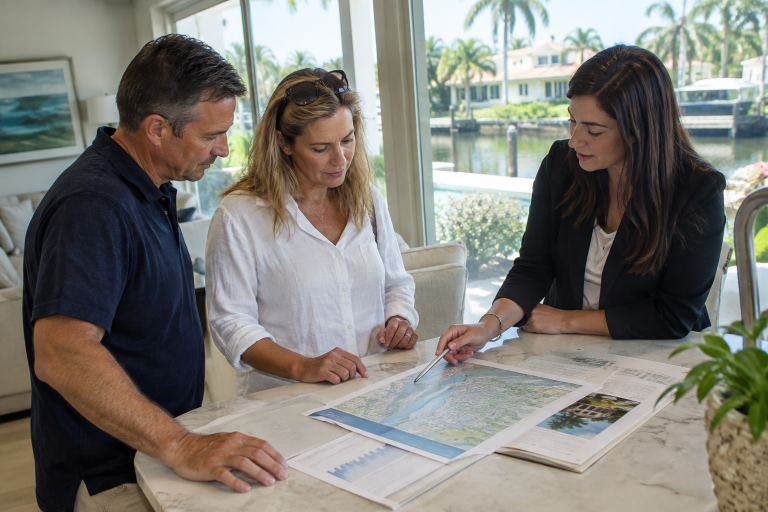
What 2026 Map Updates Could Mean for Buyers
Collier County announced a proposed Flood Insurance Rate Map update on August 19, 2026, beginning a 90-day appeal period. The county has identified summer 2027 as the target for the new map to become effective, subject to completion of the review process. Buyers should not assume that a preliminary map, an older listing description, or a neighbor’s experience establishes the final status of a property.
Instead, review the proposed Collier County flood-map changes alongside the current effective map, then ask the lender and a licensed insurance professional how the property’s present status and potential future changes may affect coverage requirements. This is particularly important when a purchase timeline extends into 2027.
Flood Insurance and Homeowners Insurance Are Not the Same
Homeowners’ insurance policies often exclude damage from rising floodwater. Flood insurance may therefore be a separate policy. When a home is in a designated higher-risk area and the buyer uses a federally regulated or federally insured mortgage, the lender may require flood coverage. Cash buyers may not face the same lender requirements, but they should still include flood coverage in their risk and ownership-cost review.
Request quotes for homeowners, wind, and flood coverage early in the inspection period. A quote based on the exact address is more useful than a neighborhood average because coverage and pricing can depend on the structure and underwriting information, not simply the ZIP code.
Five Property Details That Can Affect the Review
- Elevation: Ask whether an elevation certificate is available and have qualified professionals explain its relevance to the home.
- Roof age and condition: Review permits, inspection findings, and the roof’s remaining useful life.
- Storm protection: Document impact-rated openings, shutters, reinforced garage doors, and other protective features.
- Construction and renovation history: Verify permits for major improvements, additions, electrical work, and structural changes.
- Water-related improvements: For waterfront homes, inspect seawalls, docks, lifts, drainage features, and pool equipment.
Questions to Ask Before Making an Offer
- What is the property’s current flood-zone designation?
- Is an elevation certificate, survey, or prior flood determination available?
- Has the seller disclosed previous flood damage, water intrusion, or major storm repairs?
- What do current homeowners, wind, and flood insurance quotes show?
- How old are the roof, windows, HVAC equipment, electrical system, and major appliances?
- Are there HOA or condominium rules affecting repairs, storm protection, generators, docks, or exterior modifications?
A Practical Due Diligence Checklist
- Check the current county and FEMA mapping for the exact address.
- Request seller documents, permits, repair records, insurance history, and association materials.
- Obtain property-specific insurance quotes before the inspection deadline.
- Schedule a comprehensive home inspection and consider appropriate specialty inspections.
- Review drainage, roof condition, windows, doors, electrical systems, and waterfront structures.
- Use licensed insurance, legal, inspection, surveying, and engineering professionals for questions within their fields.
Common Mistakes to Avoid
Do not rely only on a listing’s flood statement, assume a nearby home has identical insurance costs, or wait until after inspections to investigate coverage. Buyers should also avoid confusing wind coverage with flood coverage, overlooking condo association deductibles, or assuming that new construction eliminates every water-related concern.
Make Risk Part of the Naples Home-Buying Math
A Naples home can be an exceptional lifestyle purchase, but the best decision balances lifestyle with practical ownership planning. Flood zone, elevation, insurance, storm protection, maintenance obligations, and community rules all belong in the evaluation. By verifying the exact property, reviewing current records, and seeking professional advice early, buyers can move forward with clearer expectations and fewer surprises.